Too Few Seeds

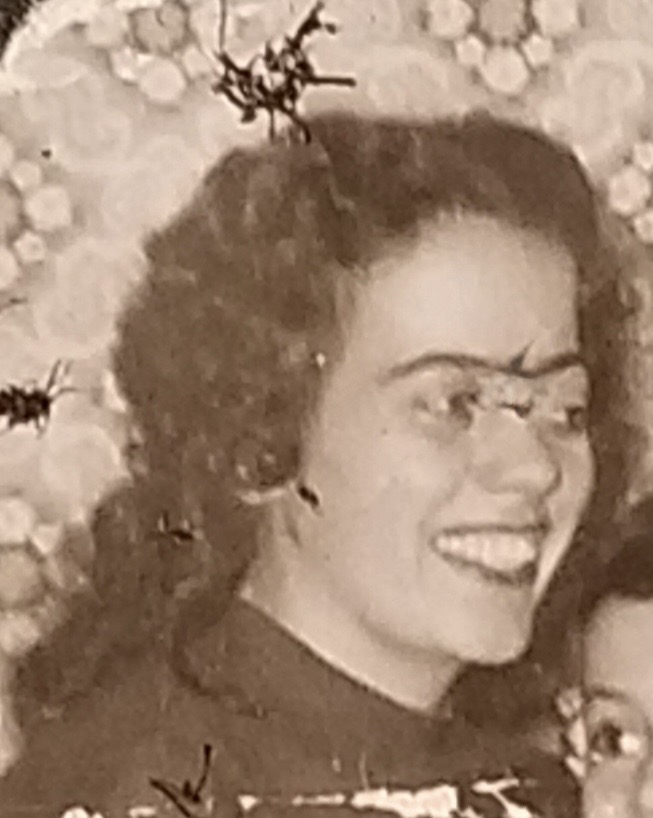
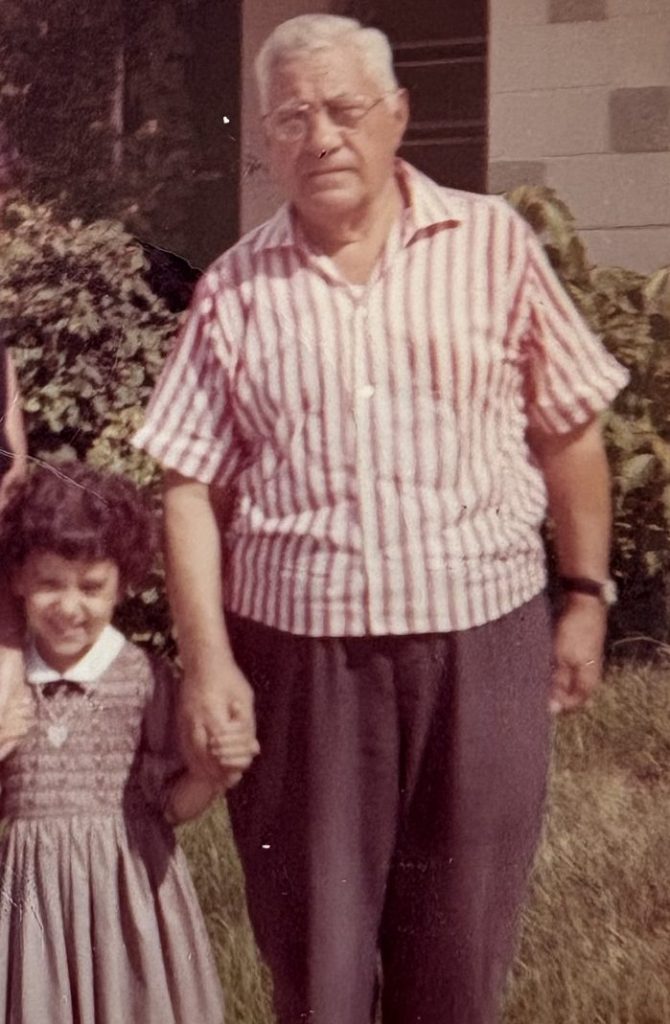
Image is my own
I hold
a handful of pomegranate seeds—
I think of you
all I know and do not know--

A bushel of grapefruits
arrive at the front door.
The next day, a bushel of oranges
followed by a bushel of pomegranates,
like tribute foretelling the arrival
of some dignitary or prince.
Every summer, the bushels
foreshadowed your visits--
The grapefruits and oranges
for my mother,
who loved all citrus,
a luxury for she didn’t have
growing up in West Virginia.
The pomegranates for me--
You knew I loved them.
Why did the bushels and the visits stop
after the summer I turned six?

These seeds I hold,
ready to throw into today’s salad,
are too few—

I remember you—
showing me how to open a pomegranate;
teaching me to count in Greek;
moving a stepstool to the counter
so I could climb and see
how to make Greek yogurt from scratch,
when you saw my nose wrinkle at the smell,
telling me, “You will like it because you Greek,”
your accent as thick and heavy as the clabbered milk
in the yogurt glasses.

The last summer you came to visit—
A train ride to Florida
to stay the whole summer
with you and Aunt Mae.
I wanted the top bunk in the train car.
You tucked me into the lower one saying,
“You fall here. No hurt. You fall from up there, you hurt,”
before hefting yourself into the top bunk.
You said you’d teach me to swim.
“Everybody in Greece swim. I teach you. You learn easy
because—” you paused, waiting--
for my six-year-old excitement to finish, “I’m Greek!”
You tousled my hair then loaded our things in the car.

Everything to be tried, to be learned, to be shown
required our liturgical call and response:
you would start, “You will like because—"
and I would finish, “I’m Greek.”

Teaching me to swim didn’t work out too well—
You told me to move my arms and legs fast,
then threw me into the ocean.
Each time I flailed and sank.
Each time you pulled me up,
“You okay. You learn.”
The third or fourth throw,
You pulled me up
And said, “Enough today.
But you learn because—”
And despite my fearful sobbing,
I finished, “I’m Greek,”
as I wrapped my arms around your neck.
We did not have time.
I never learned.

Sirens, red lights,
dark outside,
Aunt Mae crying.
The hospital cold, noisy.
Mae on the phone.
Mommy coming on the train.

You lived.
Came home.
Peeled me a pomegranate.

Mom and I left on the train.
The last time I saw you, Uncle Pete,
though you did not die until three months
after my high school graduation,
an obituary found on the internet tells me so.
But the bushels, the visits, the phone calls
Stopped the summer I turned six.
I never knew why.
I will never know now.


Fifty-nine years after that summer with you,
I stand holding a handful of pomegranate seeds,
shining their ruby glow.
Decades since last I split open a pomegranate.
Too easy to buy in plastic tubs now.
I need to finish this salad.

But I am stilled in the moment—
The truth I now know—
sleuthing through scraps of internet information
after a DNA test--
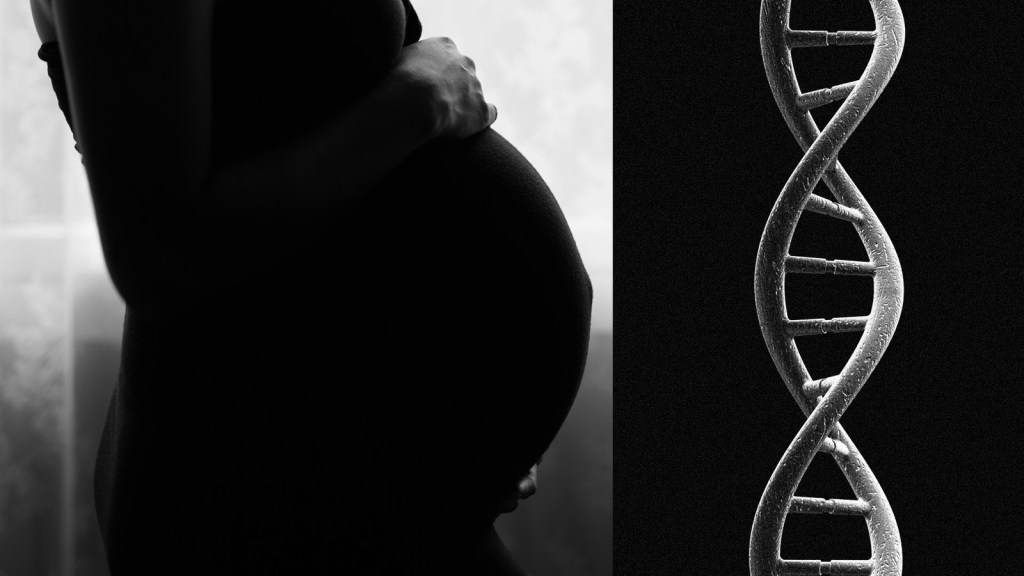
What neither of us may have known that one summer,
We were/ are father and daughter.

And these seeds I hold---
They are not enough.

The Stag

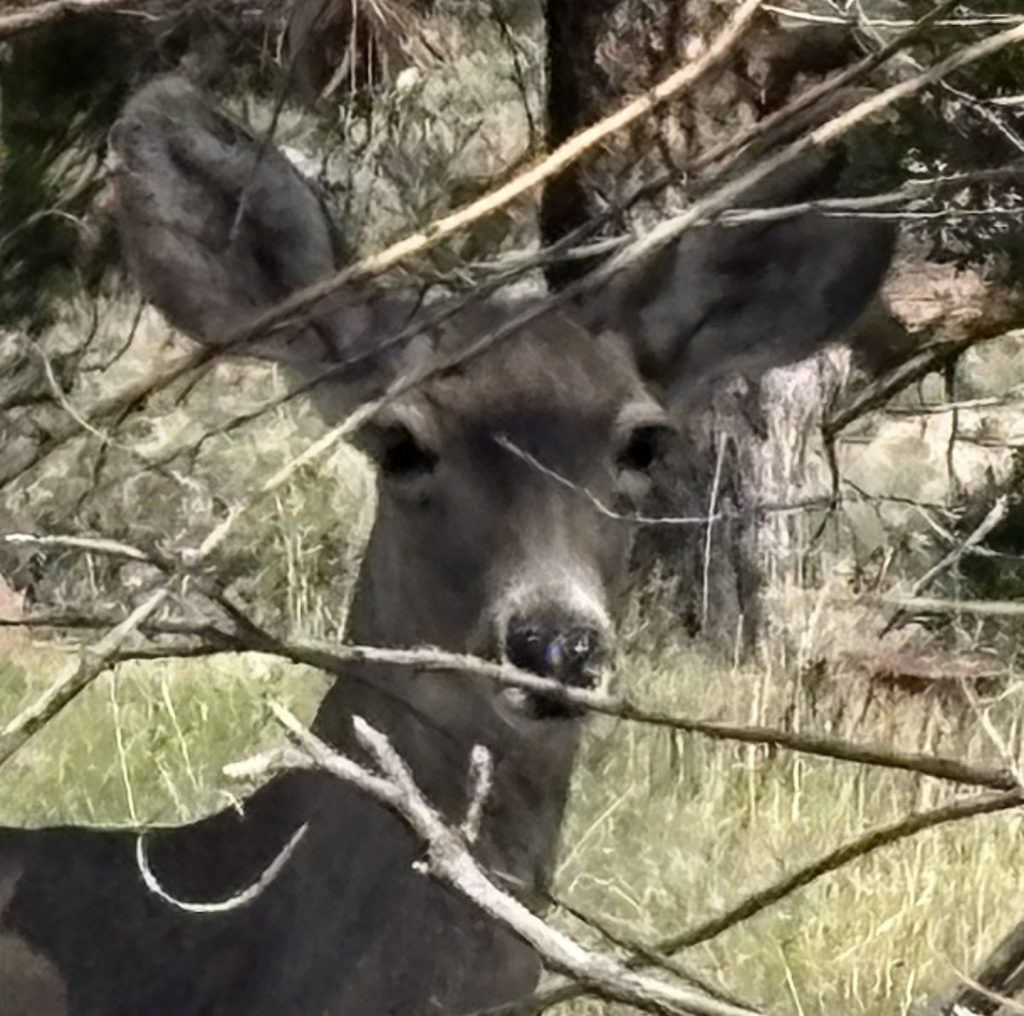
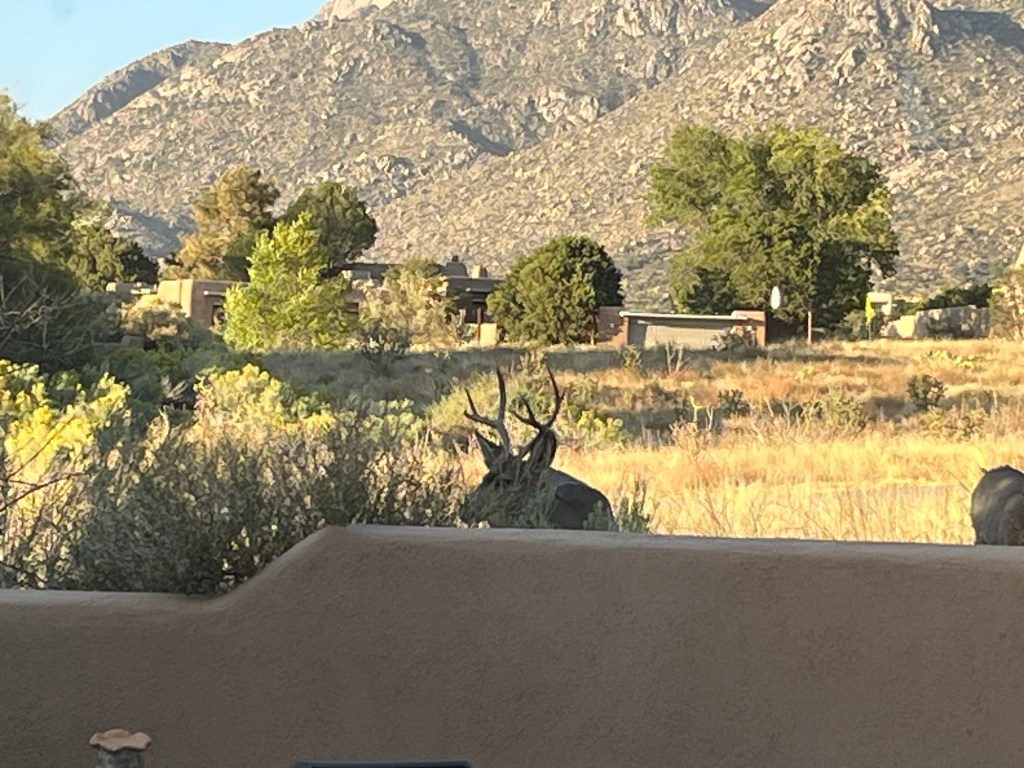
image is my own


As I sit at my desk, I watch the does scale the stucco wall.
Their leaps never fail to dazzle.
Next, they stretch their necks to grab and eat the seed pods from the trees.
Here, in the foothills of the Sandias, this sight wrings a sigh.
Then I see him, outside the wall and to the left,
watching the does.
He is large but nearly hidden behind the tall Chamisa waving in the breeze.
His head would be a prize to any hunter.
His antlers tall and wide, many pointed.
He steps away from the cover of the Chamisa.
What I thought a waving branch— an arrow lodged in his left shoulder.
He is the stag the neighbors have posted about—
The one they say will eventually succumb to the wound.
Reflexively, I rub my own left shoulder
once frozen still from scar tissue
until broken loose years ago by a medical procedure
but now occasionally aches.
How I wish I could help this buck.
Remove the arrow, apply some healing balm,
Let him recover here, feasting on seed pods, before sending him on his way
only a scar to ache every once in a while.


Accidental (Anastasia Part I)

(I originally wrote this several years ago, and it was published in my book, “The Gift of Mercy.” I’m drafting a second part to this piece and decided to reblog this as a starter.)

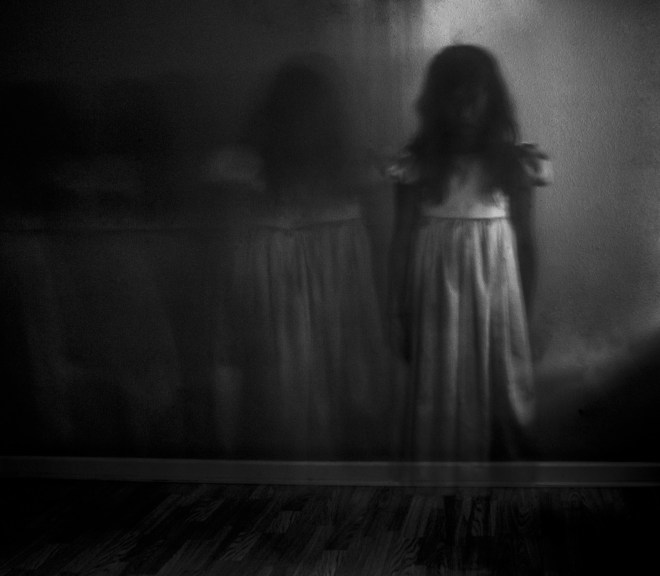
I entered life, an accidental tourist.

My mother’s body served an eviction notice,

but I ignored it and burrowed deeper

into placental warmth.

My twin, however, weaker,

entered the world a clotted, bloody,

gelatinous mess on the white tile

of a bathroom floor.

The doctor told the man,

who wasn’t really my father

but thought himself to be,

there was still a heartbeat,

still a baby left.

I felt the absence of my twin,

the lack of another’s heart

beating a rhythm to match my own,

racing toward emergence, light, life, breath.

A ghost like memory I carried with me

always— even when I, who survived

by claiming squatter’s right

to my mother’s uterus

as it tried to evict me

and who had never been told

of my twin’s existence, would

turn in childhood play and talk

to my twin sister.

My mother asking to whom I talked

and I answering in innocence—my twin sister.

Now, I recognize my mother’s twisting face

of guilt as she turned from my childhood answer:

the long walk from the restaurant’s apartment

to the stores on Broadway to buy school

supplies; the washing down of the restaurant

walls over and over again; the bed rest the doctor

said she needed when she was spotting, her body

threatening to throw out the babies she carried, ignored—

my twin and I, the children of another man,

we had to go.

But I clung, held on—born

the accidental tourist in life,

observing for my twin,

the twin I still feel.

sixty-one years later,

still listening for a heartbeat

in the same rhythm as my own.

Read and Support

Ghost Cells

image_9740e2ab-f2d8-48f1-a95a-6eee4d6d75bc
Image courtesy of Hubspot.com (Katherine J. Wu)

Links to articles that inspired this piece listed at the end.


Time reaches across

cold decades of Decembers,

whispering of you

in me,

of me

in her,

of me

entwined

between

you and her

within those eight days

of December

containing

ghosts of ghost

cells

there dwells

somewhere

inside Time’s touch,

understanding.

https://r.search.yahoo.com/_ylt=Awr48w5gkDRptO4H7YRXNyoA;_ylu=Y29sbwNncTEEcG9zAzEEdnRpZAMEc2VjA3Ny/RV=2/RE=1766262112/RO=10/RU=https%3a%2f%2fwww.theatlantic.com%2fscience%2farchive%2f2024%2f01%2ffetal-maternal-cells-microchimerism%2f676996%2f/RK=2/RS=.hmJ5tDlCRabLTKKHGU._cfCiKE-

https://r.search.yahoo.com/_ylt=Awr48w5gkDRptO4H_4RXNyoA;_ylu=Y29sbwNncTEEcG9zAzcEdnRpZAMEc2VjA3Ny/RV=2/RE=1766262112/RO=10/RU=https%3a%2f%2fwww.newscientist.com%2farticle%2fmg26134751-100-cells-from-other-family-members-live-in-you-and-protect-your-health%2f/RK=2/RS=aeOmCjbh8vLOmKkmucoRm92XlVY-

Dust of a Nation

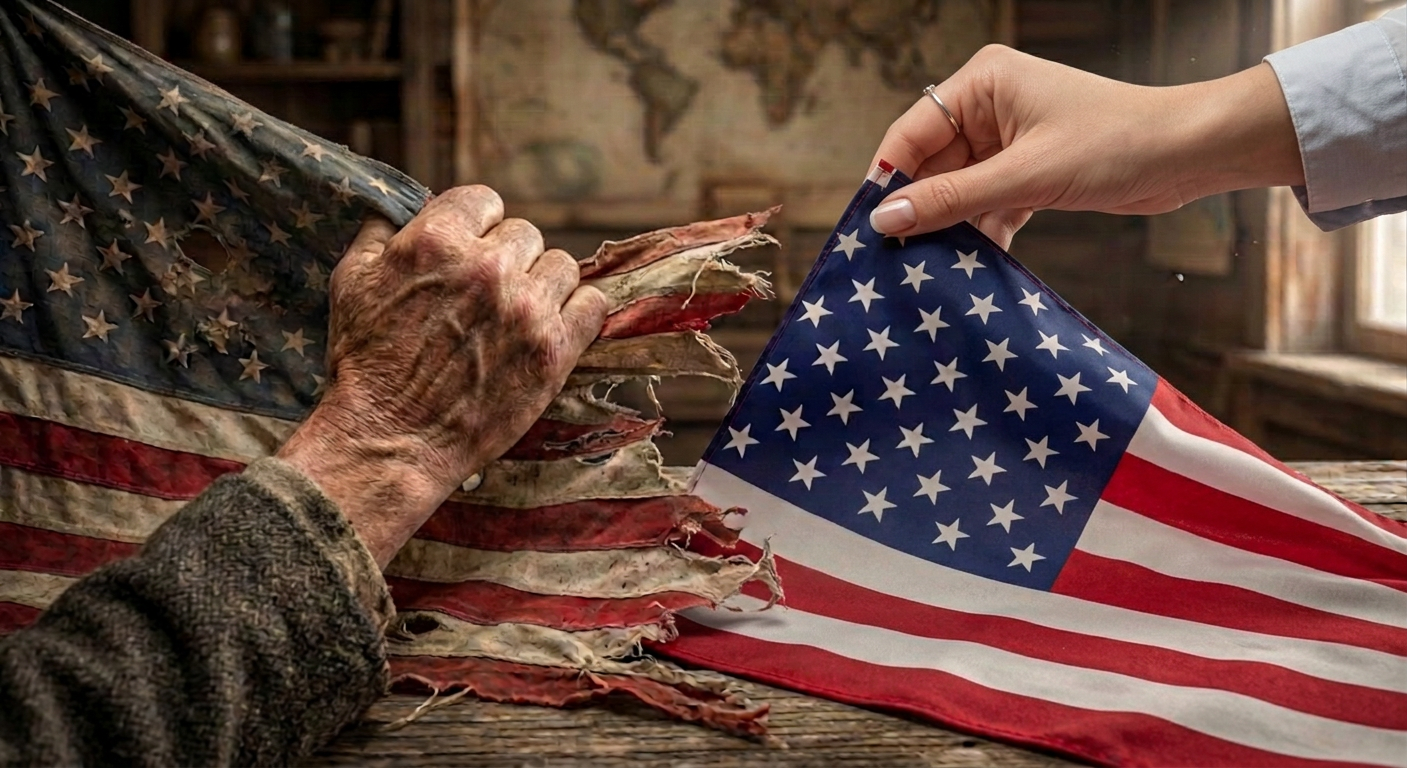
Right wing demonstrators at Texas State University


winds carried the dusty remains

of a nation across the land

burying bleeding women

in breeding graves

dug by their slave masters

who thought to teach them

of their homespun place

woven in a tapestry

of chains

the remains devoid

of time’s progressive thread

that once contained

something more

than the prison

of being named property

Times of Shattered Glass

Times of shattered glass 
herald the approaching dark
Crone of a world war.

At night, soldiers come
children cry out, glass shards of fear
crushed into their skin

If we do nothing--
slaves we become, breathing out
blood drops of a dream,
emptied of promise
held within springtime blossoms
of “a more perfect union”

The End of Us

The imbued promise of humanity dies,
consumed with the cancer of fear.
A swan song of church bells,
calls to prayers drift on the winds.
As humanity prays Salat al-Janazah,
The Mourner’s Kaddish,
El Malei Rachamim,
A Prayer of Eternal Rest,
Or Psalm 23–
take your pick—
While meditations for enlightenment
circle the drain of wishes
for the humane to be found
within what humanity was created to be—
Now only found in one minute sound bites
of feel-good stories at the end of the evening news
to give us hope for a brighter tomorrow,
leaving a cloying aftertaste of baby food custard
in the tiny souls we have left ourselves.
Though drops of water possess
the power to eventually wear away stone,
these drops of feel-good stories can never fill
the promise we never made reality--
the potential we were given and squandered.
We fed the isotopes
of our hate
our selfishness
our greed
our self-aggrandizement
until morbidly obese with evil
that overtook our planet
our souls
our societies,
and we became
not the sweet dream
any God saw in us
but the nightmare
now plaguing that God.

An Empty Nest

Image is AI generated
A barren tree stands tall and strong across the street.
I see it weekly on days I volunteer.
It’s naked limbs waving on windy days.
High up, in the crux where two branches meet,
sits a large, empty nest. Too large for small Avian visitors.
Not a home for sparrows or finches, surely.
Built by crows or grackles or large jays, perhaps--
The nest sits, stable and empty,
as if a child took a large dark brown Sharpie
and drew a circular blob
when asked to draw a bird’s nest
on a page featuring an outline of a tree.

Its emptiness captures me. Mirrors me.
It stood, providing shelter for the young
growing there.
Now, abandoned by the young
it once sheltered,
the adult birds, no longer of use,
have abandoned it as well--
Each having traveled on their way.
Yet the nest survives--
Empty,
except for the glue of memory
attaching it to the tree--
As I am emptied
of the young
I once sheltered.

Hiding

image is AI generated
He covers his sunlit towhead with one of his blankies and loosens glistening giggles.

And I remember what it is to hide. Hiding, a thing of childhood, joyful for this boy of three with his shining towhead appearing sprinkled with glitter in the sunlight and the bubbling raspy giggles he lets loose as he covers and uncovers his shimmering head with his beloved blankie.

I learned to hide from the monster who pursued me. At times, the monster was too angry, too quick, and I had no time to hide. Other times, there was only time to seek refuge behind rustling silk dresses, a molting mink, and piled up shoe boxes—only to be yanked out by an arm, thrown across a room before the whipping began. On rare occasions, there was time to make it to the small bedroom on the third floor where there was a closet over the stairs. The floor of the closet was raised and filled with boxes of junk. The boxes created a barricade against the monster my mother often became when she drank. Though she drank daily, always drunk by the time the evening news came on, the monster did not appear every day. On any particular day, if the monster’s rage began as a slow simmer, I would silently slip away to that closet, crawl over the boxes, and listen as the rage of the drunken monster began boiling below, hoping the stomping monster did not make her way up to the third floor. That third-floor closet never failed. I never allowed myself to breathe in the safety of that third floor over the stairs closet until long after the sounds of raging below stopped. Then, closing my eyes, enjoying the silence, my muscles beginning to relax, I would breathe in the safety found in the darkness.
By the time I was twelve, I had outgrown the safe haven of the third-floor closet. There was no way to crawl over the boxes without knocking them over and making noise. My hiding place lost; I had to find a new one. One I created—not truly safe or a hiding spot, but an escape. A way to stand and take the whippings of yardsticks, wooden then metal, without a cry or a whimper, to use my mind to create an escape, a place my body could not go, yet my mind could fly in moments to the safety of silent blackness.

This little three-year-old towheaded boy, finished with his hiding game, asks for cold, frozen, blueberries. Upon discovering there are no cold blueberries left, he wails. A grieving wail with fat tears. It is tragic, this absence of cold blueberries. And all I can do is find a distraction for him. But I smile and I am teary eyed at this dramatic switch from joyous laughter to tragic grieving loss of cold blueberries because he knows he is safe. He can go from laughter to tears because he does not doubt his safety here in this place among these hearts within this room filled with sunshine.

Later, when I hug and kiss him goodnight, I say a silent prayer that he never knows what it is to seek safety in darkness and only ever knows what it is to feel the safety offered in the warmth of sunshine.