
I tear the trailing ivy
From the trunk of the crepe myrtle tree,
A routine autumnal yard task,
Look up to a partly cloudy Texas sky,
Think of madmen and bombs,
A madman and eleven shot dead
As they prayed on Shabbat—
No words, no words come
Even the birds fall silent.
Category: Uncategorized
In Honor of Narges Mohammadi, Jailed Iranian activist and 2023 Nobel Peace Prize winner
Hair Part I & II

Women, we are tortured by our hair.

It is never what we want.

It never obeys our desires.

A mischievous heathen,

it laughs at our attempts

to bend it to our will.

We grow it, cut it, dye it,

curl it, straighten it,

treat it with carcinogenic chemicals

to beat the mischief making

blasphemer into submission.

All the while, it laughs at us

as our enemies, humidity and wind,

destroy in seconds
the cooperation

we thought we’d earned

with our torturous machinations.


Hair:

Too thin,

Too thick,

Too curly,

Too unruly,

Too straight,

Too limp,

Too frizzy,

And the color—

Too…too…too…too-too little

and too-too much of everything—

Never exactly as it should be.

It will not follow our will.

Pull it into a ponytail.

Shove it under a baseball cap or a sun hat.

Why don’t we just shave our heads

And let it be done?


This woman’s crowning glory,

a temptation enough to make angels fall

from the heights of heaven at the sight it,

necessitates head coverings and wigs for women,

according to some.

After all, who wants it to rain angels

into the streets of the world?

That’s a sight I wouldn’t mind seeing

since I’ve got questions for those angels.

For one, why do women have to help angels

control such lusty impulses?

But I digress as I begin my morning battle

with my own head of hair.

II
I grasp this beast of kinky

curls that sits upon my head,

attempting to tame it into submission.

First, the wire brush stretching strands

straight as concentrated hot air

dry the water from the beast.

Slowly the taming comes.

Finally dry, frizz left there,

making me aware who the boss really is.


I break out my next weapon

against this frizzy beast:

The flat iron.

And while it heats,

I tune the speakers to a podcast

about the missing women of Juarez.

Sectioning my beast hair as I listen

about women missing,

women found dead,

women to whom no one paid attention

because

they were

women, girls

because

they were

brown

because

they were

poor

women, girls

brown

poor—

The things

that do not grab attention

that fade away in the media

easy to say of these—

They ran away.

With a boyfriend, likely.

Oh, she’s a drug addict.
Who knows where she went?


And on I go to straighten another section

Of hair with my hot flat iron.

My beast neatly tamed.

I think it would be easier to braid my hair into rows.

Decorating the braids with small beads,

a bead for each missing woman,

a bead for each murdered woman,

a bead for each missing, murdered, indigenous woman of color

in this land, across the globe.

Each tiny bead

with a name microscopically etched

and then braided into my hair

as beads of grief,

a bead for each woman, each girl—

If I could then even lift

my bead heavy head

like the mothers who carry

sandbags of grief searching

the world for daughters

gone missing—

what could I, one person, do?


The world spins on.

Despite the burden of beads,

these beads braided

into the fabric of motherhood

across the globe

for girls gone missing,

girls glanced at, ignored

by a society that sends up invisible prayers

then turns forgetting what it deems valueless,

girls marked by the violence of poverty,


Then I think of 22 year old, Mahsa Amini.

dead in the twisted irony

of morality police custody for a hijab violation.

I should shave my head in solidarity

with the women of Iran

who protest.

But what could I, one person, do?


Would beads or a shaved head here make a difference?

Would anyone know the meaning?

My neck cannot bear the weight of braids with beads enough for each woman.

My bald head would not be understood as sign of solidarity.


So I send out my chicken scratches of a poem

into the world, and I choose to leave it as it is,

Untamed and ugly.
My Darker Objects – Annette Kalandros

I could whisper to you of all my darker objects. They are saved, neatly tucked away like the items in my garage, hung, strung, organized with care— …
My Darker Objects – Annette Kalandros
Of Stones and Weeds

I could rake these stones.
Free these tiny weeds
which my feeble fingers fumble to grab
and tweeze out.
Yes, with a rake,
I could disturb the harmony
of stones, free the weeds—

But no.

I have had enough of stones.
I’ve enough of their weight
placed upon me.
I’ve carried the tonnage of stone
from place to place,
lived under it,
barely breathing through years,
lived decades encased within a sarcophagus
of other’s demands and expectations,
all shattered now in lovely shards
left in the distance behind me.

No, I will leave these stones undisturbed.
They will not take up my time.
There are other ways to weed,
and should the weeds take the stones,
there is beauty to be found in the wildness of weeds.
My Mother’s Washboard

The old washboard

stands in a five dollar flea market tub

with three faded, scratched up tall coke bottles,

a rusted plaid patterned lunch pail,

a red plastic mesh bag filled with used beach toys,

a broken hobby horse some kid rode once

while yelling, Hi, Ho, Silver! Away!


Among this disregarded dusty junk,

the old washboard looks fragile

as if the wood surrounding the corrugated steel

might fracture should a woman grasp it

intending to use it to scrub stains

from familial laundry

like my mother did with her’s.


I remember my mother’s washboard

standing in her soaking bucket,

filled with 20 Mule Team Borax, Biz, and hot water,

which stood in the concrete laundry tubs

in the basement of the house.


I remember how her knuckles turned red,

the skin raw looking, as she scrubbed blood

from a blouse, pouring salt from a Morton’s

salt container onto the stain then scrubbing

up and down, up and down on the washboard,

then dunking the blouse twice

to see if the stain was gone.

Pour, scrub, scrub, dunk, dunk

pour, scrub, scrub, dunk, dunk

pour, scrub, scrub, dunk, dunk

The pattern, the rhythm, until the stain erased.


I have no soaking bucket,

no Twenty Mule Team Borax, no Biz,

no washboard

to get my stains out.

My spray bottle of Oxi Clean Stain Remover

pales in memory

of my mother’s washboard.
Hair part II: Untamed and Ugly


I grasp this beast of kinky

curls that sits upon my head,

attempting to tame it into submission.

First, the wire brush stretching strands

straight as concentrated hot air

dry the water from the beast.

Slowly the taming comes.

Finally dry, frizz left there,

making me aware who the boss really is.


I break out my next weapon

against this frizzy beast:

The flat iron.

And while it heats,

I tune the speakers to a podcast

about the missing women of Juarez.

Sectioning my beast hair as I listen

about women missing,

women found dead,

women to whom no one paid attention

because

they were

women, girls

because

they were

brown

because

they were

poor

women, girls

brown

poor—

The things

that do not grab attention

that fade away in the media

easy to say of these—

They ran away.

They ran away with a boyfriend.

Oh, she’s a drug addict.  Who knows where she went?


And on I go to straighten another section

Of hair with my hot flat iron.

My beast neatly tamed.

I think it would be easier to braid my hair into rows.

Decorating the braids with small beads,

a bead for each missing woman,

a bead for each murdered woman,

a bead for each missing, murdered, indigenous woman of color

in this land, across the globe.

Each tiny bead

with a name microscopically etched

and then braided into my hair

as beads of grief,

a bead for each woman, each girl—

If I could then even lift

my bead heavy head

like the mothers who carry

sandbags of grief searching

the world for daughters

gone missing—

what could I, one person, do?


The world spins on.

Despite the burden of beads,

these beads braided

into the fabric of motherhood

across the globe

for girls gone missing,

girls glanced at, ignored

by a society that sends up invisible prayers

then turns forgetting what it deems valueless,

girls marked by the violence of poverty,


Then I think of 22 year old, Mahsa Amini.

dead in the twisted irony

of morality police custody for a hijab violation.

I should shave my head in solidarity

with the women of Iran

who protest.

But what could I, one person, do?


Would beads or a shaved head here make a difference?

Would anyone know the meaning?

My neck cannot bear the weight of braids with beads enough for each woman.

My bald head would not be understood as sign of solidarity.


So I send out my chicken scratches of a poem

into the world, and I choose to leave it as it is,

Untamed and ugly.
Cruelty of Spring

April,

spring,

green,

a time of renewal,

life begins, grows,

days warm,

April, the month of poetry,

inspiration to be found

watching nature as she yawns,

stretches, rubs the winter’s sleep

from eyes closed against the cold—


Then why am I cold still

this April morning

as i sit

and sip

coffee

this fine sun warmed

April morning—


It is—

The three children of Covenant school,

The nineteen children of Robb Elementary,

The children,

The children—

All the children who knew terror

in the final moments of life.

All the children who live

now knowing the horror

of seeing classmates, bloodied, dead and dying

on the floor of a classroom.


This warm sun heralds spring’s return,

life’s renewal, the earth’s promise,

yet I can find no warmth.
Time of Year
It is the time
of grey skies
and dead brown grass
along the roadsides.
The time when the trees
are seen shivering,
their limbs quivering in their nakedness.
When even many of the evergreens drip down
brown, bloodied from the lethal knife wounds
of a sharpened frenzied freeze
as they sag into their deaths.
Yes, it is that time of year
when I yearn
for the green of spring,
for limbs to wrap myself within,
for a renewal of promises
I once longed to make.
The time of year
when I empty forty years
of myself.
The Dirt of Chimayo
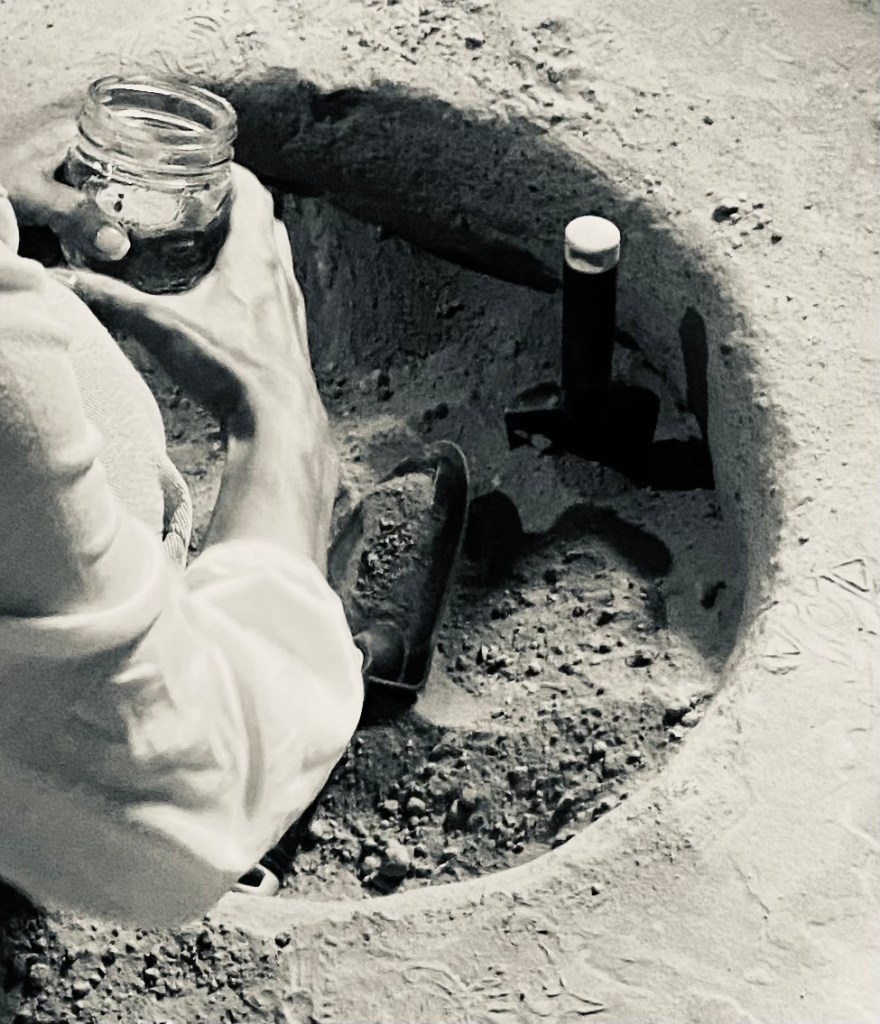
As if you erupted
from an eternal spring,
an immortal thing,
I gave you away
when last I prayed
here at Chimayo.
When kneeling
I scooped the healing dirt
as I spoke silent prayers of thanks
for my heart bravely facing
shocks of resuscitation
after years spent
barely beating
in stuttering grief.

Upon return today,
I kneel to scoop
the healing dirt,
asking in silent prayer
a blessing of forgiveness
for giving you away
too easily—
thus, killing you,
bleeding you of all hope,
beyond resurrection,
beyond resuscitation.

In the dirt of Chimayo,
this healing earth,
from this place of faith,
sifted through my hands,
I bury you, a mortal thing,
I gave away too easily
to an undeserving faith,
in this dirt of Chimayo.
I’m filled with a sense of gratitude today. “A Song Reminds Her” from The Gift of Mercy has been nominated for the Pushcart Prize.

 Hearing The Mermaids Sing