Letters To My Mother

Her Story About Voting and Hope
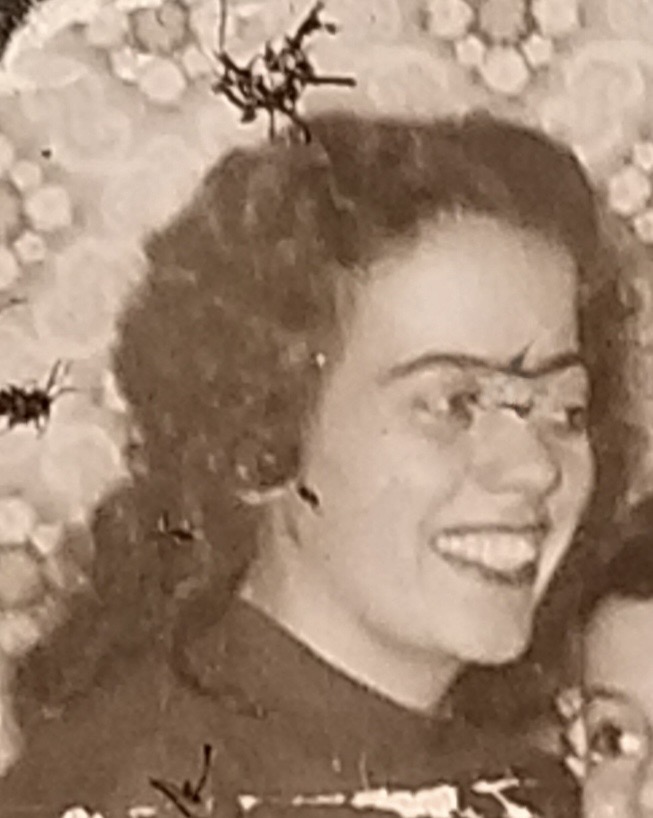
My mom

Dear Mom,

I want to preserve your stories. The stories you told of how you grew up in the poverty of West Virginia during the Great Depression. I want your granddaughter to know them, to absorb the wisdom they contain.

Since it is near a pivotal mid-term election, I am reminded of your story about importance of voting. I heard you tell this story so many times I memorized your words, and so I will let your words tell the story—

“It was early November. Don’t remember the date or day. I was about nine years old when it happened. Back up in the mountains, in the hollers*, people would to cook food for a family where someone was ill or if the woman had just had a baby, and the kids, like around my age then, we’d deliver it.

It was my mother’s turn to make a food bundle for a neighbor family in the holler. The woman had just given birth a little while ago but was suffering with sickness after. So that afternoon, my mother sent me up there with a pot and a bundle of food for the family. I had no trouble going down the road to deliver the food. But it seemed such a long way. It was already twilight by the time I got there to deliver the food.

So, on the way back, I decided going through the woods would be quicker. But I’d never been through the woods. I ended up getting all turned around and couldn’t find my way back to the road. By that time, it was pitch dark. I was so scared. I heard something that sounded like a big animal, a bear or something, so I climbed up a tree where I thought it would be safe. It was damn cold that night too.

I was scared. I was cold. I knew my mother was going to be pissed off. Early in the morning, it must have been just as it was getting light, I heard all these people calling for me. I could hear my father above all of the others. I shimmied down that tree so happy to be found. I yelled out. My father was the first to reach me. He scooped me up. My mother, she was lightening mad. She was rambling on about teaching me a lesson about not running off like that. She took out her little knife she always had in her apron pocket and cut a switch off a tree. She grabbed me from my father and said I needed a good whippin’. Now, my father, he usually let my mother do the disciplinin’ of us kids because he was always working in the mines or traveling to find work in other mines or farms. But not that day. He swept me up and grabbed my mother’s wrist as she started to drawback, and he said, ‘Renie, ain’t nobody gonna whip any of my kids today! Nobody! Even you, their Mama. Franklin Delano Roosevelt was elected our president yesterday, so today we’re gonna celebrate that because we got somethin’ to hope for.’ My mother dropped her switch and kept her head down as my father carried me home. The rest of the people took off to their homes.

And we did. We had hope. Took time but things started to get better little by little.”

Then we would watch the Watergate hearings and you would throw your house slipper at the 13-inch black and white television sitting on the kitchen buffet, ranting about how you couldn’t understand why people would vote for a crook like Nixon especially when Marylanders knew Agnew was a damn crook from the start and birds of a feather and all.

Your rant always ended with “that’s why you vote. Keep the crooks out. Get good people in who care about us. Not these guys who wanna line their pockets.” By then you may have knocked back a six pack, but there is no denying that you were right, Mom. You were absolutely right.

*holler- hollow, I know. But my mother and aunt always said holler so I use her words as this is her story.
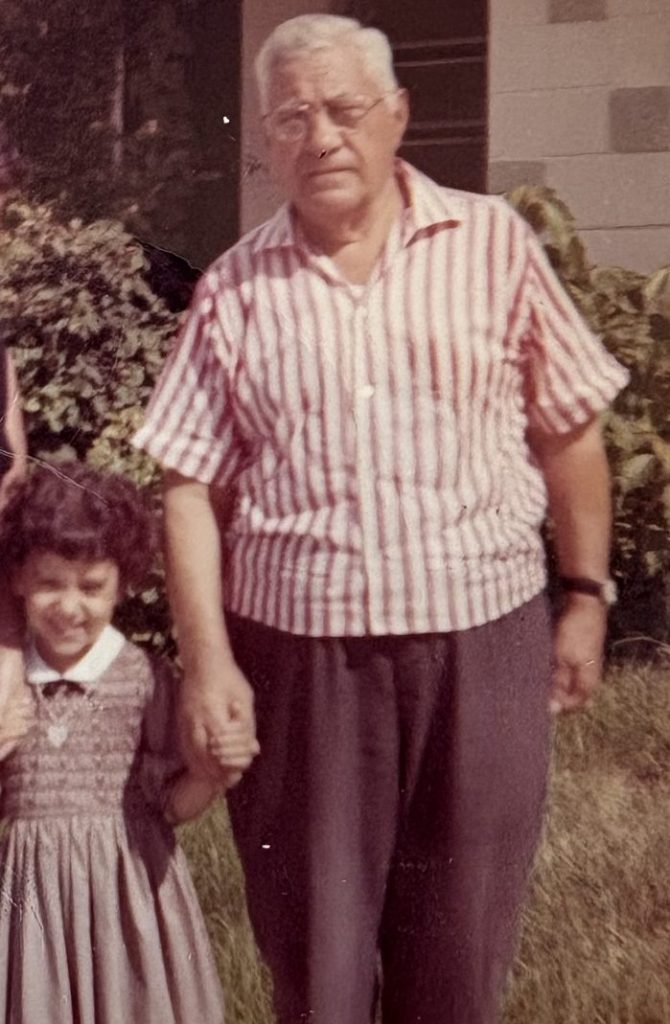
Too Few Seeds

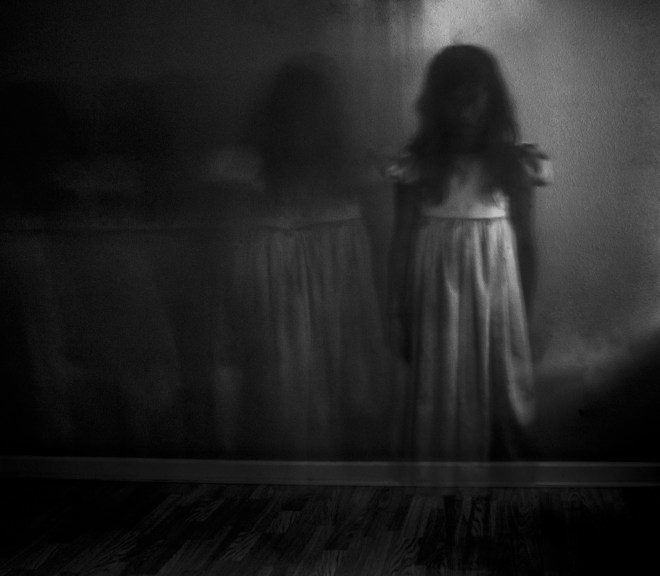
Image is my own
I hold
a handful of pomegranate seeds—
I think of you
all I know and do not know--

A bushel of grapefruits
arrive at the front door.
The next day, a bushel of oranges
followed by a bushel of pomegranates,
like tribute foretelling the arrival
of some dignitary or prince.
Every summer, the bushels
foreshadowed your visits--
The grapefruits and oranges
for my mother,
who loved all citrus,
a luxury she didn’t have
growing up in West Virginia.
The pomegranates for me--
You knew I loved them.
Why did the bushels and the visits stop
after the summer I turned six?

These seeds I hold,
ready to throw into today’s salad,
are too few—

I remember you—
showing me how to open a pomegranate;
teaching me to count in Greek;
moving a stepstool to the counter
so I could climb and see
how to make Greek yogurt from scratch,
when you saw my nose wrinkle at the smell,
telling me, “You will like it because you Greek,”
your accent as thick and heavy as the clabbered milk
in the yogurt glasses.

The last summer you came to visit—
A train ride to Florida
to stay the whole summer
with you and Aunt Mae.
I wanted the top bunk in the train car.
You tucked me into the lower one saying,
“You fall here. No hurt. You fall from up there, you hurt,”
before hefting yourself into the top bunk.
You said you’d teach me to swim.
“Everybody in Greece swim. I teach you. You learn easy
because—” you paused, waiting--
for my six-year-old excitement to finish, “I’m Greek!”
You tousled my hair then loaded our things in the car.

Everything to be tried, to be learned, to be shown
required our liturgical call and response:
you would start, “You will like because—"
and I would finish, “I’m Greek.”

Teaching me to swim didn’t work out too well—
You told me to move my arms and legs fast,
then threw me into the ocean.
Each time I flailed and sank.
Each time you pulled me up,
“You okay. You learn.”
The third or fourth throw,
You pulled me up
And said, “Enough today.
But you learn because—”
And despite my fearful sobbing,
I finished, “I’m Greek,”
as I wrapped my arms around your neck.
We did not have time.
I never learned.

Sirens, red lights,
dark outside,
Aunt Mae crying.
The hospital cold, noisy.
Mae on the phone.
Mommy coming on the train.

You lived.
Came home.
Peeled me a pomegranate.

Mom and I left on the train.
The last time I saw you, Uncle Pete,
though you did not die until three months
after my high school graduation,
an obituary found on the internet tells me so.
But the bushels, the visits, the phone calls
stopped the summer I turned six.
I never knew why.
I will never know now.


Fifty-nine years after that summer with you,
I stand holding a handful of pomegranate seeds,
shining their ruby glow.
Decades since last I split open a pomegranate.
Too easy to buy in plastic tubs now.
I need to finish this salad.

But I am stilled in the moment—
The truth I now know—
sleuthing through scraps of internet information
after a DNA test--
What neither of us may have known that one summer,
We were/ are father and daughter.

And these seeds I hold---
They are not enough.

Accidental (Anastasia Part I)

(I originally wrote this several years ago, and it was published in my book, “The Gift of Mercy.” I’m drafting a second part to this piece and decided to reblog this as a starter.)

I entered life, an accidental tourist.

My mother’s body served an eviction notice,

but I ignored it and burrowed deeper

into placental warmth.

My twin, however, weaker,

entered the world a clotted, bloody,

gelatinous mess on the white tile

of a bathroom floor.

The doctor told the man,

who wasn’t really my father

but thought himself to be,

there was still a heartbeat,

still a baby left.

I felt the absence of my twin,

the lack of another’s heart

beating a rhythm to match my own,

racing toward emergence, light, life, breath.

A ghost like memory I carried with me

always— even when I, who survived

by claiming squatter’s right

to my mother’s uterus

as it tried to evict me

and who had never been told

of my twin’s existence, would

turn in childhood play and talk

to my twin sister.

My mother asking to whom I talked

and I answering in innocence—my twin sister.

Now, I recognize my mother’s twisting face

of guilt as she turned from my childhood answer:

the long walk from the restaurant’s apartment

to the stores on Broadway to buy school

supplies; the washing down of the restaurant

walls over and over again; the bed rest the doctor

said she needed when she was spotting, her body

threatening to throw out the babies she carried, ignored—

my twin and I, the children of another man,

we had to go.

But I clung, held on—born

the accidental tourist in life,

observing for my twin,

the twin I still feel.

sixty-one years later,

still listening for a heartbeat

in the same rhythm as my own.

The Words Rebel

I had an argument with all my words today. 

For they would not stay
in their delightfully organized spots.
Seems, if you will,
they wanted to jump around and play,
ignoring the sense of my color coded dots.

I must admit I lost my patience, yelling,
“We will never accomplish
anything useful if you play
In this most rambunctious way.”

To this, they in unison whined,
“Why must we be serious all the damn time?”

And to that, I could not provide argument.
Thus, we decided to play
And took a vacation today.

The Chase of Words

Image courtesy of Windows Report

VJ’s Weekly Challenge: The Chase – One Woman’s Quest II


The words—

It is the always—the words—

I have always been

Searching the sidewalks, paths, trails, highways, the sky outside

     For the words—

Combing gently through those I love

     For the words—

Hunting the faces of strangers, my own face, my dogs, my friends

     For the words—

Scouring the hearts, the souls of those I observe

     For the words—

Ransacking restful, peace giving nature

     For the words—

Scourging even, in the chase, my faith

     For the words—

And they are never perfect.

The Words

I
Words scattered across the page.
Words littering the soul.

All these words
Piled upon the table,
A hoarder’s table of words.

Words left unsaid,
Unwritten,
A bouquet of words
Wilting in the heart and mind.

Words twisted in contortionist meaning
Of manipulations,
Weaponized for destruction,
Yet leaving victims living.
II
Words of things that can’t be said.
Words of things that should have been.
Words of things we could not speak out of fears too deep.
Words of things we could not begin to understand
Of ourselves, of each other.
Words of things we wanted so to believe
Of others, of the world.
Words of hope
Of love
Of charity
Of peace.
Words of what we have lost.
Words of what we may never again find.
III
Words, words, words
Slipping through the fingers
Like water in a desert,
Dripping away, evaporating
Before they can be used.

Words, words, words
Twisting round the wrists,
Writhing up the arms,
Biting the face and neck,
Killing before they can be used.

Words, words, words
Left unread by faded ink,
Left unwritten by a tired mind,
Left unsaid by a fear filled mouth.